Nintendo’s colorful ink-splatting franchise has always been an enjoyable experience, but for many players, the competitive multiplayer format struggled to maintain long-term engagement. While the shooting mechanics remained solid and the unique paint-traversal gameplay offered something genuinely fresh in the shooter genre, the online battles often lost their appeal after just a few weeks. Splatoon Raiders represents a significant departure from this formula, marking the first time Nintendo has built an entire game around single-player content. The looter shooter approach works remarkably well, suggesting this could represent a new direction for the franchise that could thrive alongside its multiplayer counterparts.
Key Points
- Splatoon Raiders abandons competitive multiplayer entirely, building a full campaign around PvE loot runs against Salmonid enemies
- Three Tank classes—Speed, Power, and Tactical—each unlock unique Gadgets that fundamentally change combat approach and mobility
- Gadget modifications create emergent strategies, like converting defensive Splatellites into rapid ink-path generators for faster traversal
- Missions run roughly ten minutes each, fitting the quick-session rhythm typical of successful looter shooters
- Seasoned enemy variants add salt-armor layers requiring prioritization, keeping late-game encounters challenging despite familiar foes
Familiar Characters, Completely New Structure
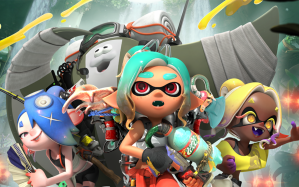
The development of Splatoon Raiders appears to draw heavily from the existing Splatoon ecosystem while completely reimagining how players interact with it. The game retains core elements like varied weapon types and the beloved Salmonid enemies, and even features the members of Deep Cut, the popular band from Splatoon 3, as its main heroes. However, these familiar components have been rearranged into something entirely new, perfectly encapsulated by a quote found early in the game: “All that matters now is the loot!” This shift from competitive ink coverage to treasure hunting fundamentally changes the player experience in ways that feel surprisingly natural for the franchise.
The Splatoon series first launched in 2015 for the Wii U, introducing players to a world of anthropomorphic squids engaging in colorful turf wars. The game was praised for bringing a family-friendly alternative to the shooter genre, which had been dominated by more mature titles. Subsequent entries, including Splatoon 2 and Splatoon 3, expanded on this foundation with new weapons, modes, and story content. However, the single-player campaigns in previous titles always felt secondary to the multiplayer experience. Splatoon Raiders changes this dynamic entirely, putting PvE content at the forefront and proving that the franchise’s mechanics translate beautifully to a loot-driven adventure.
Deep Customization Through Tanks and Gadgets
| Tank Type | Signature Gadget | Playstyle Focus |
|---|---|---|
| Speed | Booyarang (spinning ink radius) | Mobility and area denial |
| Power | Splatellites (orbiting shields) | Defense and sustained damage |
| Tactical | Shot Pot (auto-turret) | Zone control and positioning |
Instead of competing against fellow players to splatter the most territory with ink, Splatoon Raiders challenges players with a series of PvE missions. These range from quickly gathering Power Eggs under time pressure to roaming expansive maps collecting crystals to power drilling machines. The core objective remains consistent throughout: defeat Salmonids and collect loot. This simple but effective loop proves incredibly engaging. Your ink color now changes from stage to stage, while enemies consistently spew their signature sickly yellow-green goo, creating visual clarity in what can become chaotic battlefields.
Returning veterans will find comfort in the familiar weapon roster. Shooters, splatanas, and dualies all make appearances, though some weapons from the competitive modes feel less practical in this new context. The roller, for instance, excels at covering ground with ink in traditional matches but proves less effective against hordes of aggressive fish enemies. Rapid-fire weapons tend to shine in Raiders, though the shotgun-like slosher offers satisfying close-range devastation. The game cleverly encourages experimentation by tying weapon levels to player experience, gently nudging players toward trying new equipment when their preferred options fall behind the power curve.
The true revolution comes in the form of Gadgets, which fundamentally alter how players approach combat. Three Tank types—Speed, Power, and Tactical—define your available Gadget selection and playstyle. The Speed tank offers the Booyarang, a spinning weapon creating small ink radiuses, while the Power tank provides Splatellites that orbit your character protectively. The Tactical tank grants access to the Shot Pot auto-turret, adding a strategic defensive option. Each Gadget feels distinctly different, and new options unlock as players progress through the campaign, maintaining a sense of discovery throughout the experience.
Emergent Builds That Reward Experimentation
Nintendo has included Sampler Dungeons to encourage players to step outside their comfort zones. These short trial stages let players test unfamiliar Gadgets while rewarding curiosity with bonus Skill Points. The curated design of these encounters effectively teaches players the clever applications each Gadget offers, making them worthwhile even for experienced players. The Gadget modification system adds another layer of depth, allowing players to equip parts that enhance their favorite tools. Initial upgrades offer straightforward improvements like increased power or area of effect, but advanced modifications introduce special effects like scorch damage for Splatellites or increased fall damage for the ground-striking Meteor Mitt.
This array of options leads to creative applications that reveal themselves throughout the entire campaign. For example, reducing the Splatellite cooldown sufficiently transforms a primarily defensive tool into a mobility option, laying down swimmable ink paths while in squid form. This enables rapid battlefield traversal without pausing to shoot a swimming path, making it easier to quickly reach and neutralize distant turret towers. Such emergent gameplay possibilities seem nearly endless, with each piece of gear offering multiple strategic applications waiting to be discovered.
Showstopper abilities provide emergency options paired to specific Deep Cut members who accompany players on voyages. Unlike Gadgets, these powerful abilities recharge slowly through defeated enemy eggs rather than cooldowns. However, their devastating impact can completely turn the tide of difficult encounters. Shiver’s ability, which spawns a massive shark cutting across the battlefield, has saved countless desperate situations. The progression system does have some rough edges—maxing out a preferred Tank or Showstopper means gaining experience that cannot be transferred to less-developed options, creating an awkward choice between feeling underpowered or wasting progress.
Salmonid Variety and the Case for More PvE Splatoon
The Salmonid enemy variety keeps encounters fresh throughout the campaign. Most enemies will be recognizable to series veterans, but their “Seasoned” variants, covered in protective salt layers, present significantly tougher challenges. The game extracts remarkable value from rearranging enemy compositions across different battlefields, building toward genuinely hectic encounters in later stages. Managing the battlefield and prioritizing threats becomes a thrilling exercise that never grows stale, especially with the constant promise of better loot driving players forward. Stages typically last around ten minutes—an ideal length for casual looter shooter sessions—allowing quick play sessions that still feel rewarding.
While Splatoon Raiders focuses primarily on single-player content, multiplayer options exist for those seeking cooperative experiences. Players can group up for co-op raids featuring scaled difficulty and corresponding loot rewards. This feature worked well during pre-release testing but clearly serves as a supplementary option rather than the main attraction. The entire campaign can be completed solo, and the game is better for this design philosophy. This represents a significant evolution for a franchise previously defined by its competitive multiplayer focus.
Splatoon Raiders seems unlikely to replace the mainline Splatoon titles, which have proven enormously successful for Nintendo. The competitive ink-splattering formula has clearly found a dedicated audience willing to engage for months or years. However, Raiders demonstrates remarkable franchise flexibility, delivering a single-player campaign far more satisfying than previous story mode attempts in mainline entries. This looter shooter sub-series deserves to thrive alongside the competitive games, offering an alternative entry point for players who prefer cooperative or solo experiences. The concept already delivers tremendous fun, and future iterations could push these ideas even further, potentially establishing an entirely new pillar for one of Nintendo’s most beloved modern franchises.
What This Means for Splatoon's Future
Splatoon Raiders directly addresses the retention problem that has haunted the series since 2015. Competitive turf wars offered exceptional first impressions but struggled to hold casual players beyond a few weeks. By borrowing the loot treadmill from games like Destiny and The Division, Nintendo gives players a tangible reason to return: better gear, new Gadget mods, and incrementally harder Seasoned enemies.
The decision to spotlight Deep Cut and the Salmonids—both fan favorites from Splatoon 3—signals that Nintendo views PvE as a complement rather than a replacement for multiplayer. Salmon Run already proved co-op horde modes resonated with the community; Raiders simply extends that concept into a full progression loop. The ten-minute mission structure also suggests mobile or Switch successor ambitions, prioritizing portability.
The rough edges matter, though. Progress locked to individual Tanks forces awkward choices between optimization and experimentation. If Nintendo patches in cross-Tank experience sharing, the build diversity would open up considerably. Watch for post-launch support to determine whether Raiders becomes a platform or a one-off experiment.
Common Questions
Is Splatoon Raiders multiplayer or single-player only?
The game is built primarily around single-player PvE missions. You fight Salmonid enemies and collect loot rather than competing against other players. Deep Cut members accompany you as AI partners who provide Showstopper abilities.
Do weapons from previous Splatoon games return in Raiders?
Yes. Shooters, splatanas, dualies, sloshers, and rollers all appear, though their effectiveness varies. Rapid-fire weapons tend to outperform rollers, which were designed for territory coverage rather than horde combat.
How long are missions in Splatoon Raiders?
Most stages last around ten minutes, making them suitable for quick play sessions while still offering meaningful loot rewards and escalating enemy encounters.
Expert Opinion: Splatoon Raiders represents a strategic masterstroke from Nintendo, demonstrating that their colorful shooter franchise possesses untapped potential beyond competitive multiplayer. The looter shooter mechanics translate surprisingly well to the Splatoon universe, and if sales figures support this direction, we could see Nintendo developing parallel product lines—competitive games for dedicated online players and PvE content for casual and solo audiences. This dual-track approach could significantly expand the franchise’s reach while maintaining the core identity that made Splatoon successful.