
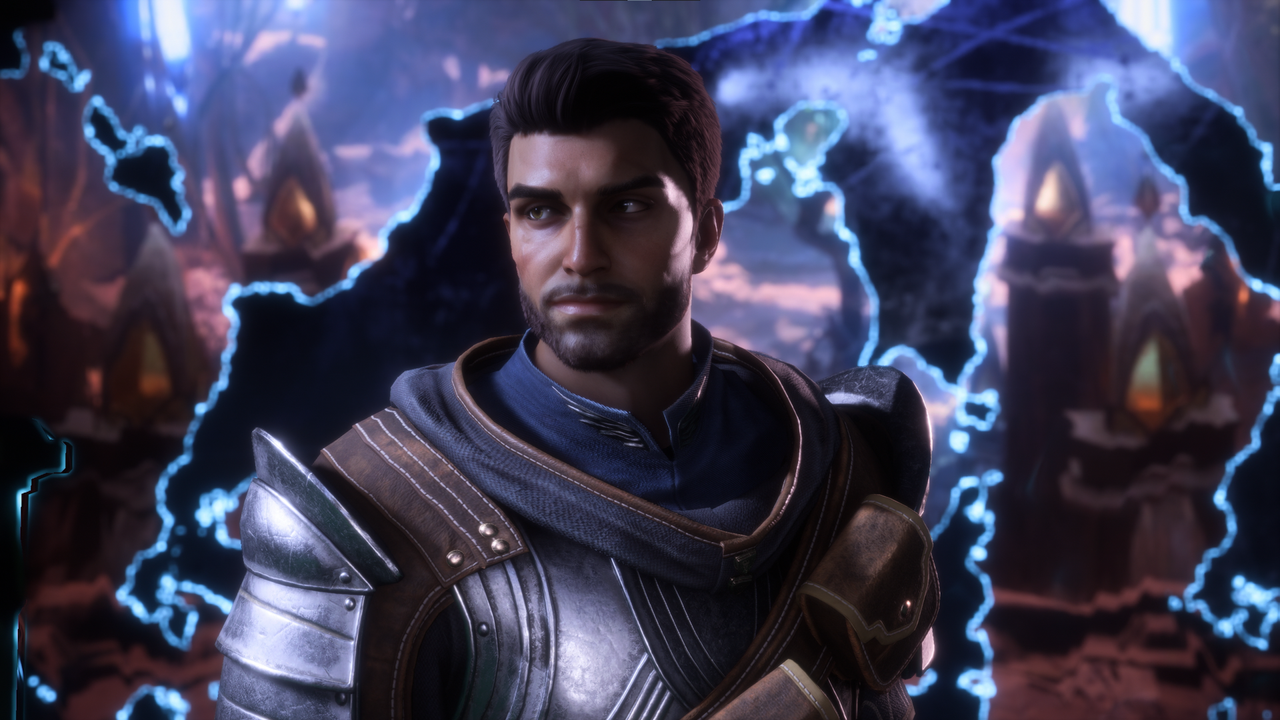
The future of the beloved Dragon Age franchise appears increasingly uncertain, according to Mark Darrah, a former BioWare producer who spent over two decades shaping some of gaming’s most celebrated role-playing experiences. In a recent interview, Darrah painted a sobering picture of the challenges facing any potential revival of the epic fantasy series, pointing to Electronic Arts’ complicated corporate priorities and a growing graveyard of abandoned intellectual properties as major obstacles to the franchise’s continuation.
The comments come at a particularly turbulent time for both BioWare and its parent company. Despite Dragon Age: Inquisition achieving both critical acclaim and commercial success upon its 2014 release, the series has struggled to maintain momentum. Dragon Age: The Veilguard, which finally launched in 2024 after a decade-long gap and multiple internal development restarts, reportedly underperformed at retail, failing to recapture the magic that once made the franchise a cornerstone of Western RPG gaming.
EA’s “Hedge Fund” Mentality and the Dormant IP Problem
During his conversation with FRVR, Darrah offered a particularly cutting assessment of EA’s corporate culture and its relationship with game development. He recalled a description that has stuck with him over the years: “Someone once described to me EA as a hedge fund with a video game hobby that it wished it didn’t spend so much money on, and I think that remains true.” This characterization reflects a broader industry concern about the tension between corporate financial expectations and the creative, often unpredictable nature of video game development.
The veteran developer emphasized that Dragon Age now finds itself among a “frightening number of IPs that are dormant” under EA’s ownership. The publisher’s catalog is indeed littered with once-prominent franchises that have been shelved indefinitely, including the critically acclaimed Titanfall series, which revolutionized multiplayer shooter mechanics, and Mirror’s Edge, the innovative parkour-focused action game that spawned a cult following. Other notable dormant properties include Dead Space, which saw a successful remake in 2023 but has no announced sequel, and the SimCity franchise, which once dominated the city-building genre.
Internal Challenges and BioWare’s Diminished Capacity
Perhaps more concerning than corporate disinterest is the question of who would actually champion a new Dragon Age project. Darrah expressed uncertainty about whether anyone currently at BioWare possesses both the passion and influence to successfully pitch another installment. “I have no concept of who could, would, possibly pitch that at EA,” he admitted. The problem extends beyond simple willingness, however, touching on complex internal politics that could doom any external effort to revive the series.
Darrah elaborated on the territorial dynamics that might emerge if someone outside BioWare attempted to take on the franchise: “The other option is somebody else within the EA organization decides they’re gonna pitch a Dragon Age and, what I expect would happen if they try to do that, is somebody at BioWare would essentially become one of those people jumping under the vents to rip that person apart.” This vivid metaphor suggests that even a diminished BioWare might resist handing over its signature creation to external teams, creating an impasse where no one can effectively move the franchise forward.
Layoffs, Restructuring, and the Saudi Investment Question
The practical realities of modern BioWare further complicate any revival hopes. The studio has been hit by multiple waves of mass layoffs as EA has restructured its operations over recent years. These workforce reductions have claimed experienced developers across numerous departments, potentially leaving the company without the institutional knowledge and creative bandwidth necessary to simultaneously develop a new Dragon Age alongside its currently in-development Mass Effect project, which remains the studio’s primary focus.
Adding another layer of uncertainty is the impending proposed acquisition of EA by a consortium of investment firms led by the Saudi Arabian Public Investment Fund. This potential change in ownership raises fundamental questions about the future direction of EA’s portfolio and which studios might be considered valuable assets moving forward. Darrah openly questioned whether new ownership would even want BioWare in the fold: “Do you want BioWare at all in this world?” he mused, acknowledging that arguments could be made both for and against retaining the storied developer.
Despite these institutional challenges, the Dragon Age community remains remarkably resilient. Dedicated fans continue to create mods, write fan fiction, and expand the universe through their own creative efforts, demonstrating that appetite for the franchise persists even as its corporate future grows murky. Whether that grassroots enthusiasm can translate into renewed corporate investment remains an open question, but for now, Dragon Age appears destined to join the ranks of gaming’s great dormant franchises, waiting for circumstances that may never align.
Expert Opinion: The gaming industry’s increasing consolidation under major publishers has created a troubling pattern where beloved franchises become trapped in corporate limbo—too valuable to sell but not profitable enough to actively develop. Dragon Age’s situation reflects a broader crisis in AAA gaming, where rising development costs and corporate risk aversion have made mid-tier franchises increasingly difficult to sustain. Unless EA undergoes significant strategic changes post-acquisition, fans should prepare for a prolonged hiatus that could stretch well into the next decade.