
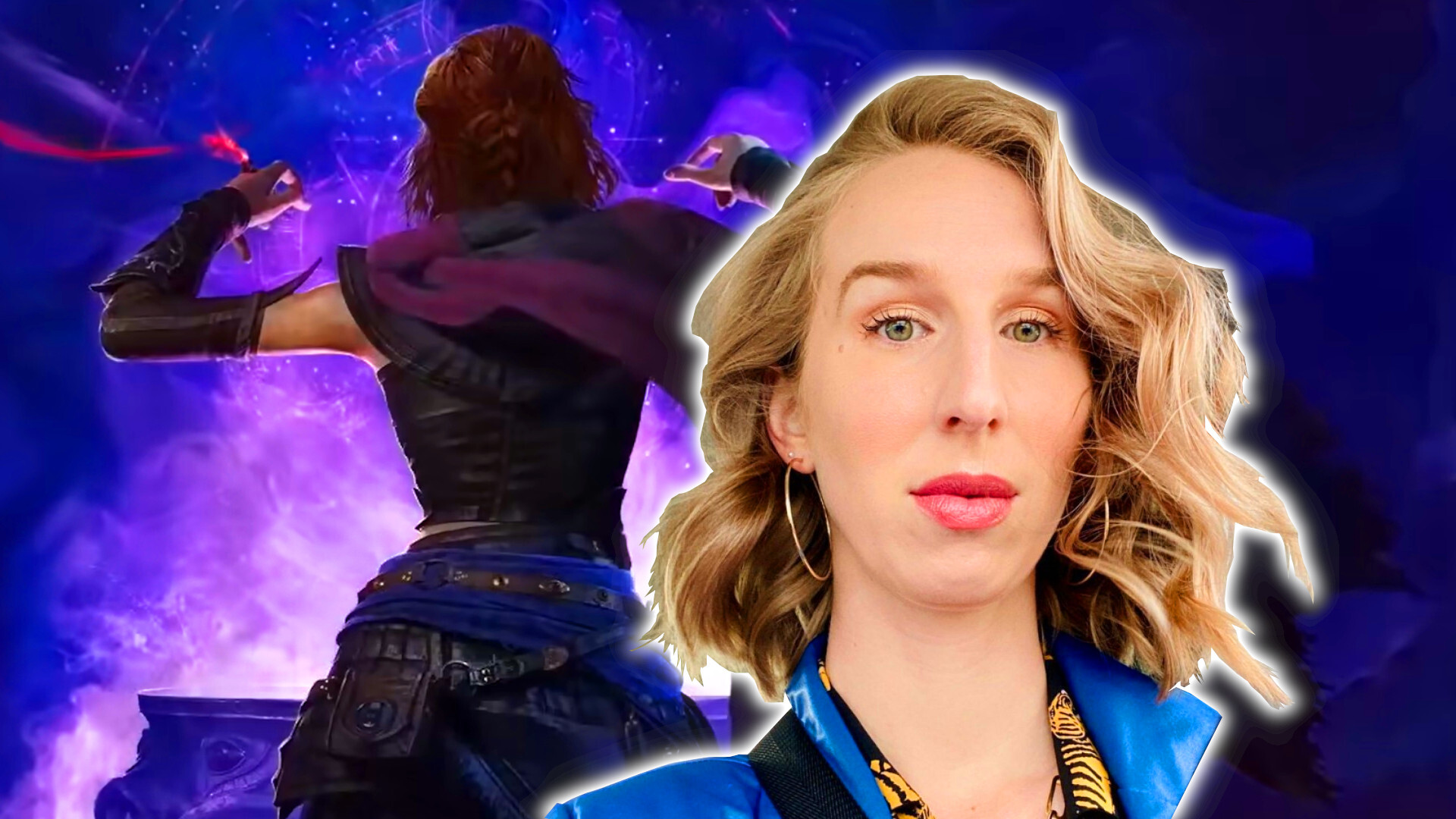
Maggie Robertson’s remarkable portrayals of monstrous and complex women show no signs of slowing down. The acclaimed voice actress, best known for her unforgettable performances in Resident Evil Village and Baldur’s Gate 3, has been revealed as a starring presence in Warlock, an upcoming Dungeons & Dragons action-adventure game from Invoke Studios. Her role? A powerful and dangerous witch named Tasha, a character that promises to add another layer to Robertson’s impressive catalog of formidable female characters in gaming.
For those unfamiliar with tabletop gaming lore, Tasha is far from a newly invented character. She holds legendary status within Dungeons & Dragons mythology, appearing in various sourcebooks and adventures over the decades. Originally known as Iggwilv the Witch Queen, Tasha is one of the most powerful archmages in D&D history, known for her mastery of demonic magic and her authorship of magical spells that bear her name. Her inclusion as a central figure in Warlock signals the game’s ambition to draw deeply from established D&D canon while offering players a narrative experience anchored by Robertson’s distinctive vocal talents.
Robertson’s Rise in Video Game Voice Acting
Maggie Robertson’s breakthrough into mainstream gaming consciousness came with her portrayal of Lady Dimitrescu in Resident Evil Village, released in 2021. The towering, vampiric aristocrat became an instant cultural phenomenon, spawning countless memes and fan art while demonstrating Robertson’s ability to bring commanding presence and subtle menace to her characters. Her performance combined elegance with underlying threat, creating a villain that players simultaneously feared and found captivating. This role established Robertson as a sought-after talent in the gaming industry, capable of elevating any project with her nuanced delivery.
Her subsequent work in Baldur’s Gate 3, where she voiced the character Orin the Red, further cemented her reputation for portraying complex antagonists. Orin, a shapeshifting assassin with a disturbing psychological profile, required Robertson to explore depths of madness and manipulation that few voice roles demand. The critical and commercial success of Baldur’s Gate 3, which won numerous Game of the Year awards, brought additional recognition to her contributions. Industry observers note that Robertson has carved out a unique niche, specializing in characters that challenge traditional notions of femininity while embracing darker, more multifaceted portrayals of women in games.
Shakespeare and Classical Training in Modern Gaming
In discussing her approach to character work, Robertson has frequently cited her classical theater background, particularly her experience with Shakespeare, as invaluable to her video game performances. According to Robertson, Shakespeare’s works are remarkably well-suited to gaming because they deal with universal themes of power, ambition, betrayal, and transformation. The heightened emotional stakes found in Shakespearean drama translate naturally to fantasy settings where characters must convey intense emotions through voice alone, without the benefit of physical presence.
This perspective reflects a broader trend in the gaming industry, where developers increasingly seek voice actors with formal theatrical training. The technical demands of motion capture and voice performance have elevated the craft to a level comparable with film and television acting. Robertson’s ability to bring theatrical gravitas to digital characters exemplifies how classical training can enhance interactive storytelling. Her observation that Shakespeare is great for games highlights the medium’s maturation as a legitimate form of dramatic expression, capable of tackling complex narratives and nuanced character development.
The Monstrous Feminine in Contemporary Gaming
Robertson’s career trajectory illuminates gaming’s evolving approach to female characters, particularly villains and morally ambiguous figures. The concept of the monstrous feminine, drawn from feminist film theory, describes female characters who embody transgressive power through supernatural or horrific means. Characters like Lady Dimitrescu, Orin, and now Tasha represent this archetype, offering players encounters with women who possess agency, danger, and complexity rather than serving as passive objects or simple adversaries. This shift reflects changing audience expectations and a desire for more sophisticated storytelling in interactive media.
As Warlock moves toward release, anticipation continues building among both D&D enthusiasts and fans of Robertson’s previous work. The combination of beloved tabletop lore, experienced voice talent, and a proven track record of compelling female antagonists suggests that Tasha may become another iconic addition to Robertson’s growing legacy of unforgettable characters in gaming.
Expert Opinion: Robertson’s continued casting in prominent villain roles signals a significant industry shift toward recognizing voice acting as serious dramatic craft. Her classical theater background provides exactly the kind of emotional range and technical precision that modern narrative-driven games demand, suggesting we’ll see more traditionally trained actors entering the gaming space as production values and storytelling ambitions continue to rise.