A senior developer at legendary game studio id Software has launched a scathing critique of Microsoft and Xbox following devastating layoffs that cut the Doom developer’s workforce in half. Chris Hays, lead services programmer at id Software who has been with the company since 2010, delivered an unfiltered assessment of the situation during a recent podcast appearance, declaring that Microsoft executives “fundamentally don’t understand art” and questioning whether the gutted studio can continue producing AAA games.
The remarks come in the wake of July layoffs that eliminated 136 positions at id Software, the iconic studio responsible for pioneering first-person shooters and creating franchises that have shaped gaming history for over three decades. Hays spoke candidly on the German gaming podcast “Auf ein Bier” with host Andre Peschke, painting a grim picture of the studio’s current state and future prospects.
A Studio Gutted Beyond Recognition
Hays did not hold back when describing the impact of the layoffs on id Software’s ability to function. “It’s hard to make a game that is AAA, that’s like we’ve done before, with half the people. And by hard, I mean impossible,” he stated bluntly. The programmer explained that entire departments essential to game development have been eliminated, leaving critical disciplines without any personnel. “If they’ve got some kind of new plan for how this is going to work, that hasn’t been told; we don’t know what that is,” he added, expressing frustration at the lack of communication from leadership.
The developer challenged official reassurances that id Software remains the same studio it has always been. “We’re not the same id. We’re half the same id. id was the people. What made us special was the people and the relationships we have,” Hays emphasized. This statement cuts to the heart of what makes creative studios successful — not just their intellectual property or technical tools, but the human talent and collaborative relationships built over years of working together on complex projects.
Corporate Messaging Versus Reality
Following the July layoffs, id Software issued a statement attempting to reassure fans and remaining employees. The studio told media outlets that while it had been “impacted,” the restructuring left it at “about the same size we were when making Doom 2016.” The company added that it still possessed “the crew we need to build the games and tech we’re known for.” However, Hays directly contradicted this assessment, claiming the studio now has fewer employees than it did during the development of Doom 2016.
According to Hays, management has been given specific talking points about what can and cannot be said publicly. “It feels like it is, instead, more reassurances. They don’t want more people to jump ship,” he explained. The developer suggested that corporate leadership is primarily concerned with preventing additional voluntary departures rather than addressing the fundamental challenges facing the diminished studio. “At the end of the day, most of it was just trying to tell us that, ‘Oh, no, everything is fine. Things will be OK.'”
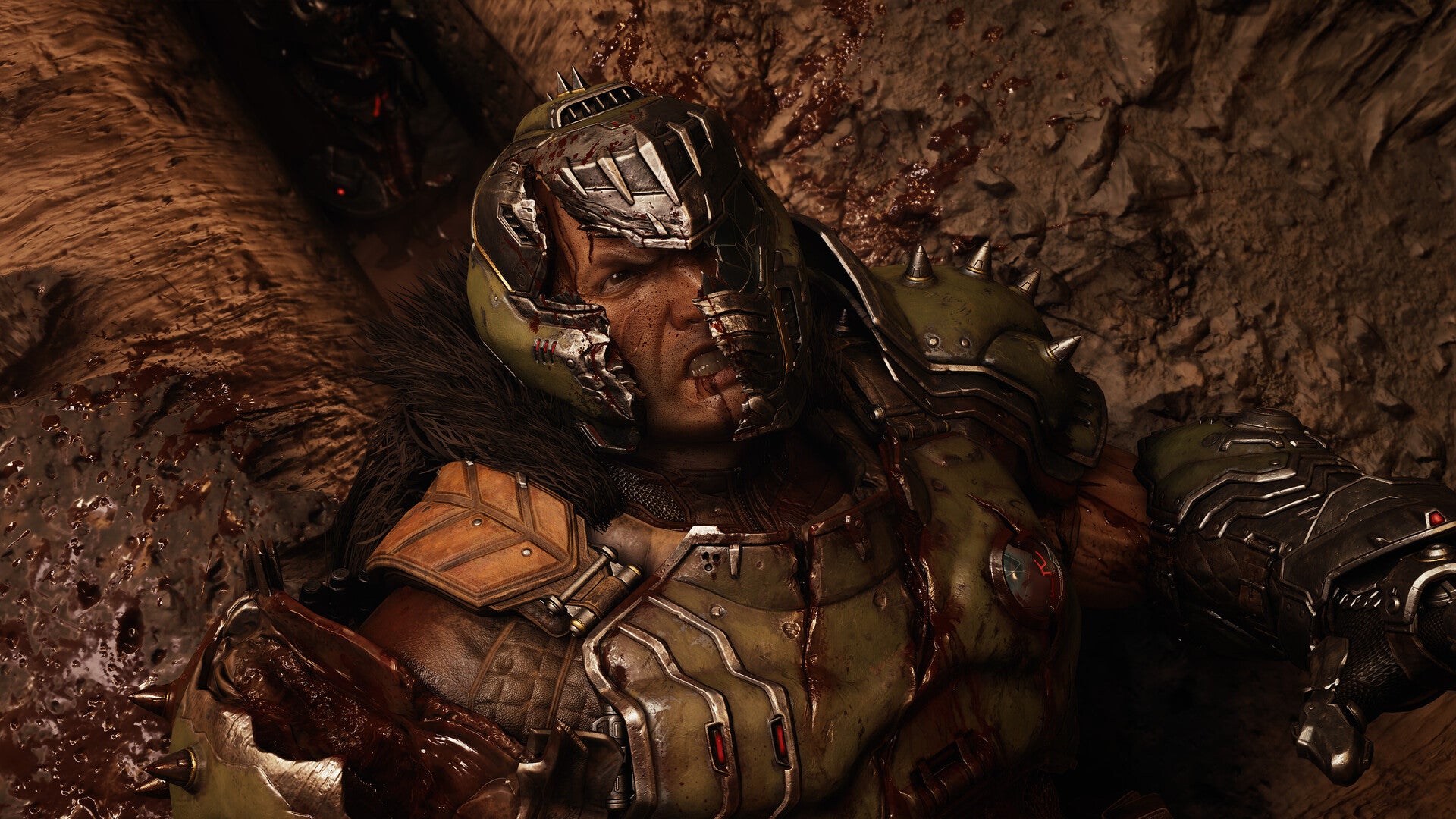
The scale of the problem becomes clearer when considering the studio’s recent output. Doom 2016 revitalized the franchise and cemented id’s position as a premier FPS developer. Doom Eternal in 2020 and Doom: The Dark Ages in 2025 built upon that success with increasingly ambitious scope. “We made bigger and better games, but that’s with twice as many people as we had,” Hays noted. “So, we have fewer than we had before. So, are we going to make something equivalent to a single-player Xbox 360 game? Because that’s the size of the studio we have.”
Game Pass and Microsoft’s Business Model Under Fire
Hays extended his criticism beyond the layoffs themselves to question Microsoft’s entire approach to the gaming business, particularly its Game Pass subscription service. When asked why id Software was hit so hard by the cuts, Hays admitted he has “no idea” about the specific reasoning but pointed to systemic issues with how Microsoft evaluates success. “I know that we have serious issues with how Game Pass is done,” he revealed.
The programmer highlighted the inherent contradiction in Microsoft’s financial reporting. “Whenever we see the Microsoft financial reports that say there were, you know, poor sales under Bethesda. What’s a sale if you have Game Pass?” he asked rhetorically. “You’re not doing a game-sold business model. They fundamentally don’t understand art. They don’t. They don’t understand art. They don’t understand games. They don’t understand that business model.” This critique echoes concerns raised by industry analysts about how subscription services affect traditional metrics for measuring game success and developer compensation.
The layoffs at id Software represent just one piece of a much larger restructuring effort at Xbox. New CEO Asha Sharma described the changes as the “most significant restructure in Xbox history,” immediately affecting 1,600 employees with another 1,600 positions to be eliminated throughout the current financial year. The total impact of 3,200 job losses represents a massive reshaping of Microsoft’s gaming division.
Legacy and Future Uncertainty
id Software holds a unique position in gaming history. Founded in 1991, the studio created foundational titles including Wolfenstein 3D, Doom, and Quake, essentially inventing the first-person shooter genre. The company’s technical innovations, particularly id Tech engines developed by programming legend John Carmack, influenced generations of game developers. Microsoft acquired id Software as part of its $7.5 billion purchase of ZeniMax Media in 2021, bringing the storied studio under the Xbox umbrella alongside Bethesda Softworks and other developers.
Hays expressed frustration with how goals and expectations are communicated to the development team. Rather than receiving clear targets, developers are simply told to “just make the best game we can.” He contrasted this with the previous arrangement under ZeniMax before the Microsoft acquisition. “If we did well on a score for critical acclaim, and we had decently solid sales but they weren’t meeting expectations, then that is a problem for marketing and sales. If you scored low, you didn’t make a good game,” he explained. “That is obviously not how Microsoft is operating. It doesn’t make any sense.”
When pressed to elaborate on his assertion that Xbox leadership doesn’t understand art, Hays returned to the human element. “If you cut half of a studio and don’t actually take in account how it’s made, you don’t understand that the cohesion between our teams was what was important. What made us successful.” Despite the turmoil, id Software recently released the Revelations DLC for Doom: The Dark Ages, which received strong critical reception. Whether the diminished studio can maintain this quality for future projects remains an open and troubling question for fans and industry observers alike.
Expert Opinion: The situation at id Software reflects a broader tension in the gaming industry between corporate financial management and creative studio culture. Microsoft’s aggressive cost-cutting appears to prioritize short-term savings over long-term creative capacity, risking the very talent and institutional knowledge that made these acquisitions valuable. If major publishers continue treating development studios as interchangeable production units rather than unique creative ecosystems, the industry may face a significant decline in AAA game quality and innovation over the coming years.