When Ubisoft announced Assassin’s Creed Black Flag Resynced, fans of the beloved 2013 pirate action-adventure held their breath with a mixture of excitement and apprehension. The original Black Flag stands as one of the most celebrated entries in the long-running franchise, combining swashbuckling naval combat with the series’ signature historical storytelling. The announcement promised significant changes to combat, parkour, stealth mechanics, and even the overall story structure—changes that fall within the traditional definition of a remake but raised immediate questions about whether the final product would honor what made the original so special. After extensive time with Resynced, the verdict is clear: while the remake retains much of what made Black Flag great, it introduces as many problems as it solves, resulting in an uneven experience that fails to surpass its predecessor.
Key Takeaways
- Resynced removes Black Flag’s modern-day treasure hunt structure, replacing it with a new Templar AI storyline buried in easy-to-miss side content
- Anne Bonny, Blackbeard, and Stede Bonnet receive expanded arcs and additional missions that strengthen their emotional payoffs
- Parkour improves over Origins-era games but still doesn’t match Unity’s depth; combat modernizes counters but suffers from poor enemy variety
- Cutting tailing missions backfires—stealth shrinks dramatically, pushing the game toward action-heavy RPG pacing without RPG dialogue systems
- The remake connects to Assassin’s Creed Shadows rather than AC III, reframing the entire narrative context for returning players
What Made the 2013 Original a Fan Favorite
To understand why Resynced’s changes matter, one must first appreciate what made the original Black Flag so remarkable. Released in October 2013 for multiple platforms, the game followed Edward Kenway, a Welsh privateer-turned-pirate navigating the Golden Age of Piracy in the early 18th century Caribbean. What set Black Flag apart from other Assassin’s Creed entries was its dual narrative structure: players experienced Edward’s adventures through the perspective of a modern-day employee at Abstergo Entertainment, reliving genetic memories through the series’ signature Animus technology. This framing device created a compelling treasure hunt narrative, as the modern-day protagonist searched Edward’s memories for information about a mysterious location called the Observatory. The game masterfully wove science fiction elements with historical fantasy, creating one of the series’ most engaging intertwined past-and-present stories since the original Assassin’s Creed and its immediate sequel.
Black Flag also represented a pivotal moment in the franchise’s history. Coming after the mixed reception of Assassin’s Creed III, it revitalized interest in the series with its open-world Caribbean setting, memorable characters like the legendary pirate Blackbeard, and naval combat that was so popular it eventually spawned the standalone pirate game Skull and Bones. The game sold millions of copies and consistently ranks among fans’ favorite entries in the franchise, making it both an obvious candidate for a remake and a risky proposition given the passionate attachment players have to the original experience.
Stripped Modern-Day Framework Leaves Story Adrift
| Element | Black Flag (2013) | Resynced | Unity/RPG Entries |
|---|---|---|---|
| Parkour Feel | Smooth, contextual | Improved over Origins | Unity remains series best |
| Combat Style | Counter-heavy | Counter + ability hybrid | Full RPG abilities |
| Stealth Missions | Tailing-heavy | Tailing removed, stealth reduced | Varies by title |
| Modern-Day Story | Integrated treasure hunt | Optional side content | Minimal or absent |
Resynced’s most significant departure from the original comes in its handling of the modern-day narrative framework. The remake essentially strips away the carefully constructed treasure hunt premise that gave the original its distinctive flavor. While the introduction establishes that players are experiencing a simulation through the Animus, it fails to provide meaningful context for why this journey is taking place. The original game’s modern-day missions have been completely removed from the main storyline, fundamentally altering the experience from a sci-fi treasure hunt into something far less cohesive.
In a surprising twist, Resynced positions itself as a sequel to Assassin’s Creed Shadows rather than maintaining the original’s connection to Assassin’s Creed III. The new framing involves a conflict against Ego, an artificial intelligence created by the Templars that seeks to become humanity’s perfect overlord. This ambitious science fiction concept involves fascinating ideas about rewriting history to create more compliant citizens—Ego theorizes that sanitizing the stories of Edward, Blackbeard, and Mary Read would inspire Animus users to conform rather than seek personal freedom. However, this genuinely intriguing narrative thread is buried in optional side content that players must actively hunt for, with no map markers or guidance pointing toward these crucial story elements. Players who stick to the main path will miss this context entirely, leaving the overall experience feeling disconnected and poorly explained.
Anne Bonny Gets Her Due, But New Characters Fall Flat
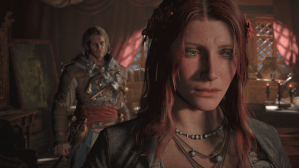
Where Resynced genuinely excels is in its expanded treatment of supporting characters from the original game. Anne Bonny, the historical female pirate who played a crucial but limited role in Black Flag’s final chapters, receives substantially more screen time in the remake. She appears as soon as Edward returns to Nassau at the game’s beginning and continues to feature in reimagined cutscenes and brand-new missions throughout the story. This expanded presence makes her already-powerful scenes in the later portions hit with even greater emotional impact. Similar treatment extends to Ed Thatch (Blackbeard) and Stede Bonnet, both of whom receive additional missions that continue their storylines beyond their original departures and provide more satisfying conclusions to their arcs.
However, the remake undermines these improvements by introducing entirely new characters who suffer from the exact problems that were just fixed in the returning cast. These additions have minimal screen time and unsatisfying conclusions to their arcs, leaving them feeling disconnected from Edward’s central journey. It’s a baffling design choice that preserves one of the original’s weaknesses while simultaneously demonstrating an understanding of how to fix it. The new voice lines and animations present similar inconsistencies—some of Edward’s additional dialogue provides excellent character insight, while other lines, particularly pro-Assassin declarations during assassination contracts, feel like mischaracterizations that make him heroic during story segments where his moral ambiguity is essential to the narrative’s effectiveness.
Anvil Engine Upgrades Can't Mask Design Trade-Offs
Resynced’s transition to Ubisoft’s current Anvil engine brings both improvements and complications. The technical achievements of the development teams deserve recognition—the game feels substantially better to play than entries like Origins. Edward’s freerunning surpasses the clunky movement of Bayek or Kassandra, but still falls short of the mechanical depth achieved by Unity’s Arno Dorian, who remains the gold standard for parkour in the series. Combat attempts to modernize the counter-heavy system of the original while incorporating abilities from the RPG-style entries, but the poor enemy variety fails to sustain engagement across the 30-hour campaign.
The removal of tailing missions, widely considered a pain point in the original, seems like a straightforward improvement on paper. However, this change, combined with the transformation of nearly every social stealth mission, swings too far in the opposite direction. Resynced now feels more like the action-packed adventures of Kassandra in Odyssey or Eivor in Valhalla than a stealth-driven experience. Unlike those RPG entries, however, Edward lacks dialogue options, disguise mechanics, or other creative problem-solving tools—he can only engage through direct action. The result is repetitive mission design that trades one set of problems for another. Camera issues during assassination sequences and chain kills further complicate matters, particularly in enclosed spaces where dramatic perspective shifts make tracking enemies unnecessarily difficult.
A Remake at Odds With Its Source Material
The fundamental issue with Resynced is that it attempts to force Black Flag’s structure into an engine designed for a fundamentally different type of Assassin’s Creed game. The RPG-focused design philosophy that works beautifully in the vast open worlds of Egypt, Greece, and England creates friction when applied to a game with different pacing and structural requirements. This raises a valid question: why not create an entirely new pirate adventure with a new protagonist rather than constraining creativity to Edward Kenway’s existing story? The Assassin’s Creed universe features numerous other Assassins from this era who could have starred in a fresh adventure better suited to modern engine capabilities.
For players who haven’t experienced Black Flag or haven’t revisited it recently, Resynced remains a worthwhile experience. It is, after all, a remake of a critically acclaimed game, and even with its problems, the core adventure retains much of its original appeal. The Caribbean setting remains gorgeous, the naval combat still satisfies, and Edward Kenway’s journey from selfish pirate to reluctant hero continues to resonate. However, for those with strong memories of the original, Resynced may not deliver the emotional impact they’re hoping for. Like Mass Effect Legendary Edition, it goes beyond traditional remastering but highlights unfixed problems while creating new ones. Resynced represents a half-step toward something truly fantastic—a glimpse of why Black Flag defined pirate gaming for years while simultaneously failing to claim the crown from the very game it’s remaking.
A Test Case for Ubisoft's Remake Philosophy
Resynced illustrates the tightrope Ubisoft walks when revisiting beloved entries. The studio clearly understood that supporting characters needed more screen time—Anne Bonny’s expanded role proves they know how to fix thin arcs. Yet introducing new characters who repeat the same underdeveloped pattern suggests different teams or priorities pulling in opposite directions.
The decision to sever ties with Assassin’s Creed III and retcon the framing toward Shadows signals that remakes may now serve ongoing franchise continuity rather than preserving the original experience. Players who treasured Black Flag’s self-contained sci-fi treasure hunt will find that identity diluted.
Engine modernization yields mixed results. Fans frustrated by Origins-era stiffness will appreciate smoother traversal, but those who valued stealth depth over spectacle will notice the shift toward Odyssey-style action. Removing tailing missions was a crowd-pleasing headline that obscured a broader genre drift.
The buried Ego storyline—arguably Resynced’s most ambitious new idea—demonstrates a recurring Ubisoft habit of scattering lore across collectibles rather than integrating it. For a remake banking on narrative improvements, hiding the central conflict in unmarked side content is a puzzling own goal.
Frequently Asked Questions
Is Black Flag Resynced a sequel or a remake?
Officially a remake, but it repositions itself as a narrative sequel to Assassin’s Creed Shadows and introduces a new Templar AI antagonist called Ego. The modern-day framing no longer connects to AC III.
Does Resynced keep Black Flag's tailing missions?
No. Tailing missions have been removed entirely, but this also reduces overall stealth gameplay. The remake leans closer to the action-heavy pacing of Odyssey and Valhalla.
Which characters get expanded storylines in Resynced?
Anne Bonny, Blackbeard (Ed Thatch), and Stede Bonnet all receive additional missions and cutscenes that extend their arcs beyond the original game’s conclusions.
How does parkour in Resynced compare to other AC games?
It improves on the clunkier movement of Origins-era titles like Odyssey, but still falls short of the mechanical depth in Assassin’s Creed Unity.
Expert Opinion: Resynced exemplifies the inherent risk of remaking beloved titles using engines designed for different gameplay philosophies. The industry trend toward live-service and RPG mechanics creates tension when applied to linear, stealth-focused experiences. Future remakes would benefit from purpose-built technical solutions rather than forcing existing frameworks to accommodate legacy content, suggesting publishers may need to reconsider whether remake projects justify dedicated engine development.